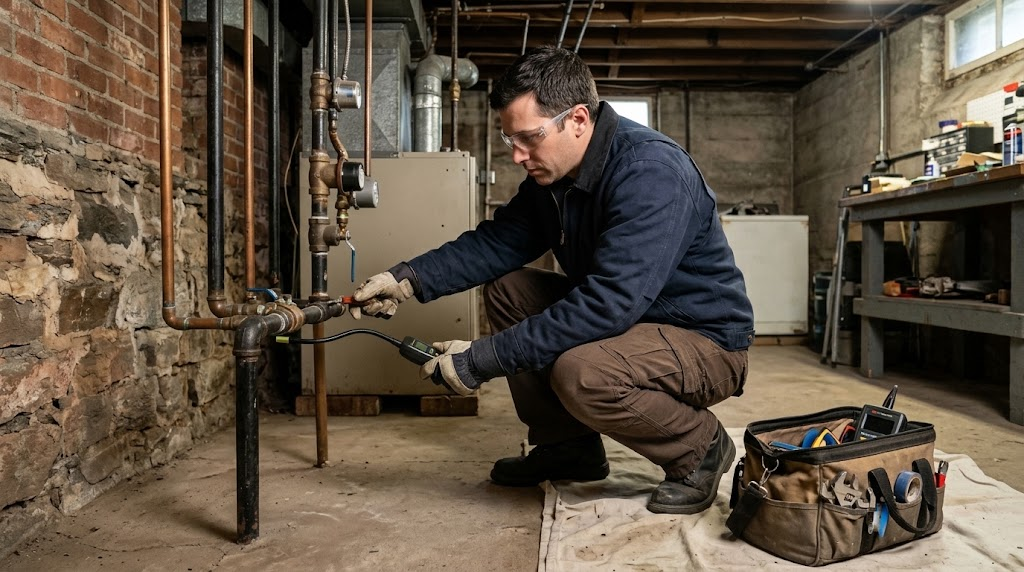
Natural gas is artificially odorized with mercaptan (smelling like sulfur or rotten eggs) for rapid leak detection. If you smell gas inside your property, DO NOT touch electrical switches, phones, doorbells, or light matches. Evacuate all occupants outdoors immediately and contact National Grid emergency response at 1-800-490-0045 or dial 911 from a safe distance before scheduling repair services.
Natural gas is an efficient and indispensable energy source for Oyster Bay water heaters, boilers, cooking ranges, and backup whole-home generators. However, compromised pipe threads, corroded fittings, or improper appliance hookups pose severe explosion and carbon monoxide hazards. Comprehensive gas line repair Oyster Bay service demands certified plumbing expertise, strict compliance with New York State Fuel Gas Code, and meticulous electronic testing before re-energizing gas supply lines.
Common Gas Line Vulnerabilities in Oyster Bay Properties
Decades of vibration, moisture exposure in damp crawlspaces, and unpermitted DIY renovations contribute to natural gas hazards:
- Corrosion on Threaded Black Iron Pipe: High basement humidity and coastal salt air along Oyster Bay and Massapequa cause surface rust on steel gas pipes, degrading joint sealant compound over time.
- Unbonded or Kinked CSST Lines: Corrugated Stainless Steel Tubing (CSST) simplifies routing through joist bays, but if not properly bonded to the home's electrical grounding electrode system, indirect lightning strikes can arc through the metal, burning microscopic pinholes.
- Drying Pipe Thread Dope: Historic homes in Syosset and Plainview often feature original gas manifolds where linseed-oil-based pipe dope has dried and cracked, permitting slow micro-seepage.
- Defective Appliance Shutoff Valves: Worn brass ball valves or antique plug valves behind dryers, ranges, and boilers can freeze or leak around valve stems when operated.
- Undersized Gas Supply Lines: Adding high-demand appliances like tankless water heaters (199,000 BTUs) or whole-house standby generators without increasing supply line diameter causes burner starvation and yellow flame soot accumulation.
Our Diagnostic & Gas Piping Protocols
When conducting a gas pipe inspection Oyster Bay service, NY Plumbing adheres to rigid technical verification standards:
Digital Pressure Decay Testing
We isolate the interior gas network from the street meter and charge the system with compressed air. A calibrated digital manometer measures pressure holding to thousandths of a PSI over the required testing duration.
Sensit Combustible Gas Sniffers
Handheld solid-state combustible gas detectors sniff out minute PPM (parts per million) gas concentrations along pipe joints, wall chases, and ceiling cavities.
Black Iron Pipe Fabrication
On-site pipe threading and cutting for heavy-gauge Schedule 40 black iron pipe, assembled with anaerobic gas-rated sealants for enduring structural security.
Appliance Gas Drops & Upgrades
Dedicated high-volume gas supply runs for tankless conversions, commercial-style kitchen ranges, hydronic boilers, and standby generator systems.
Utility Lockouts & Reconnection Service
If National Grid has red-tagged your gas meter or shut off service due to an unresolved gas leak repair Oyster Bay emergency, service cannot be restored until a licensed master plumber tests the piping, rectifies the defect, passes municipal pressure testing, and submits documentation to the utility. NY Plumbing guides you through the entire inspection and meter turn-on sequence smoothly.
Frequently Asked Questions
Leave the building right away. Do not switch lights on or off, unplug electronics, start vehicles in an attached garage, or use home phones, as any spark can ignite the fuel-air mixture. Call the National Grid gas emergency hotline or 911 from a safe outdoor distance.
The utility meter is disconnected and appliance shutoff valves are closed. The piping system is pumped with air pressure up to local code requirements (typically 3 to 15 PSI depending on the jurisdiction). A sensitive digital manometer verifies that the pressure holds perfectly level with zero drop over the required test duration.
Black iron pipe is rigid steel assembled with threaded fittings, ideal for high-impact basement runs and main utility headers. CSST (Corrugated Stainless Steel Tubing) is flexible and allows long continuous runs through building cavities with fewer joints. However, CSST requires strict electrical grounding/bonding to protect against lightning-induced burn holes.